Back
Climate Art Installation · Kozhikode, Kerala · December 2019
Marine Cemetery
2,000 discarded plastic bottles. 9 threatened species. One beach in Kerala turned into a memorial.
Climate Art Installation · Kozhikode, Kerala · December 2019
2,000 discarded plastic bottles. 9 threatened species. One beach in Kerala turned into a memorial.
2,000
Plastic bottles collected from Beypore Beach and arranged as tombstones
9
Marine species represented, each group of bottles marking a species under threat
Dec '19
Installed at Beypore Beach, Kozhikode, Kerala
8M+
Tonnes of plastic that enter the world's oceans every year
The Work
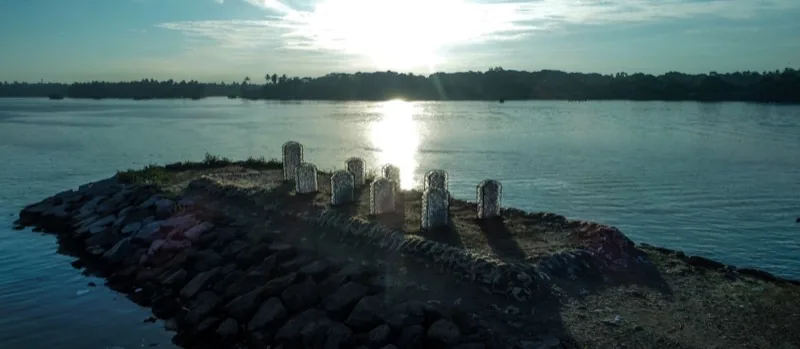
Marine Cemetery was a climate art installation created at Beypore Beach in Kozhikode, Kerala, in December 2019. The work used 2,000 discarded plastic bottles, collected from the beach itself, and arranged them in rows like tombstones across the sand.
Each section of the installation was dedicated to a specific marine species threatened by plastic pollution in Indian waters. The bottles were not brought in; they were already there. The installation did not introduce the problem. It made it visible.
The choice of Beypore was deliberate. One of Kerala's oldest fishing harbours, Beypore has long been a place where sea and livelihood are inseparable. By turning the beach's own waste into a memorial, the work posed a question: what are we willing to bury before we change?
Marine Cemetery was documented and shared widely, reaching international audiences and sparking conversations about single-use plastic, marine biodiversity, and India's coastal ecosystems. It remains one of the most-referenced works from this body of climate art.
Nine species
Each group of bottles in the installation represented a species whose survival is directly threatened by marine plastic pollution in Indian Ocean waters.
8M+
Tonnes of plastic enter the ocean every year, equivalent to dumping a garbage truck's worth every minute.
700+
Marine species have been documented interacting with plastic debris, through ingestion, entanglement, or habitat disruption.
India
Is among the top contributors of mismanaged plastic waste globally, with a 7,500 km coastline directly exposed to the crisis.
Featured in
"It's just one bottle, said 7.8 billion people." A 21-year-old climate activist explains humanity's plastic problem through a graveyard on the beach.
The Logical Indian"I think that a lot of things we follow are related to fear. The only language they can understand is fear." On Kerala's world-first Marine Cemetery, memorialising 9 critically endangered species.
YourStory"This beach in Kerala gets world's first Marine Cemetery made entirely out of single-use plastic bottles." Built from waste collected during a beach cleanup, with no bottles brought from outside.
Atlas of the FutureProfiles the installation as a plastic graveyard for endangered marine species: a memorial that uses the very material doing the damage.
Curly Tales"Kerala Now Has The World's First Marine Cemetery In Kozhikode." 2,000 bottles standing upright in the sand; each row named for a species we are losing.
The ocean is still waiting
Marine Cemetery was built for a specific shore at a specific moment. Every installation is. If you want to bring this kind of work to your coast, campus, or community, reach out.